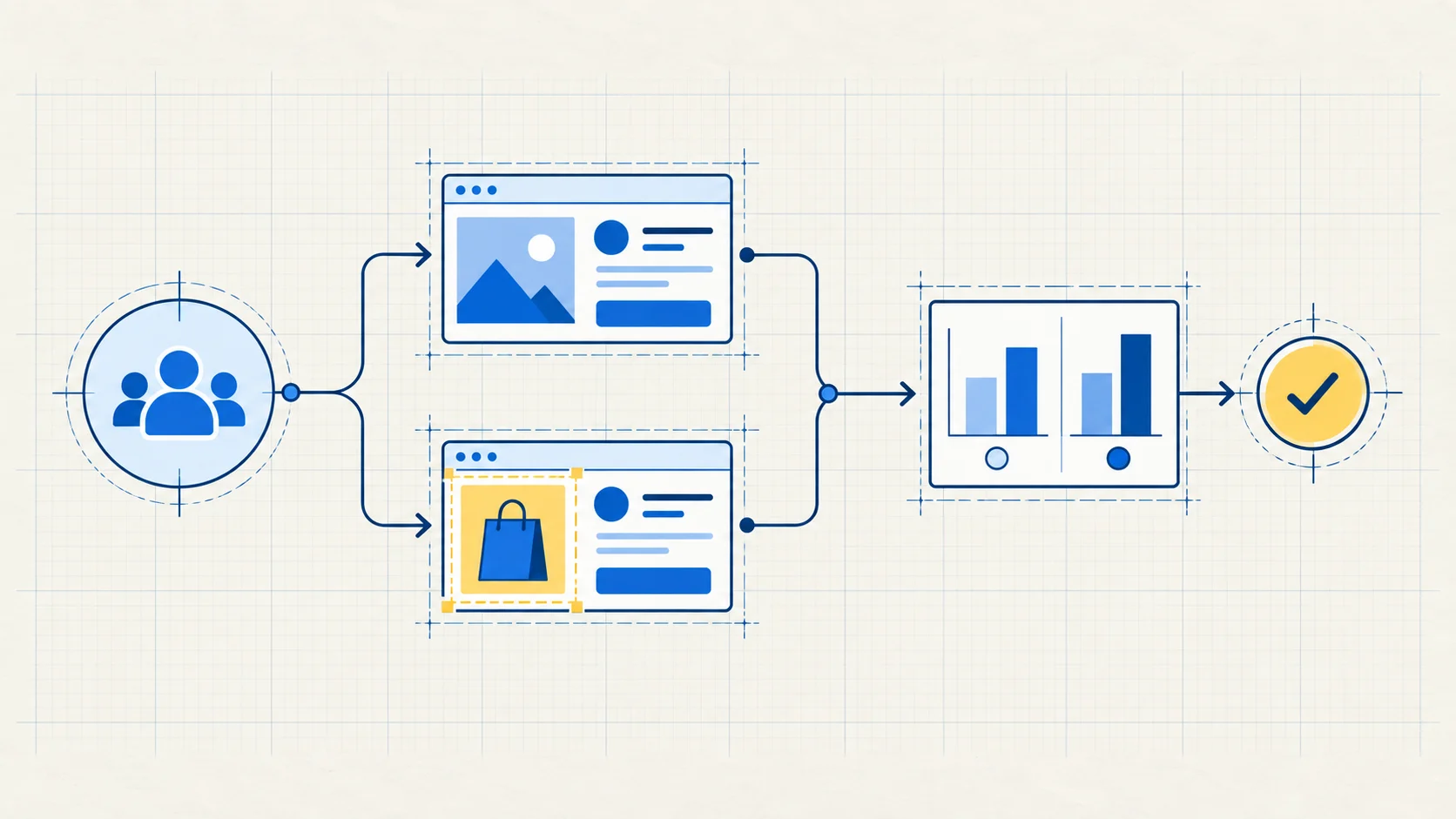
If a simple ad comparison changes the opening line, visual, offer and landing page at once, it will not show which individual change contributed to the difference. You may find a better combination, but that comparison alone will not tell you which change deserves another round.
A more useful test starts with one commercial question:
Which buyer situation or buying reason should this ad emphasise?
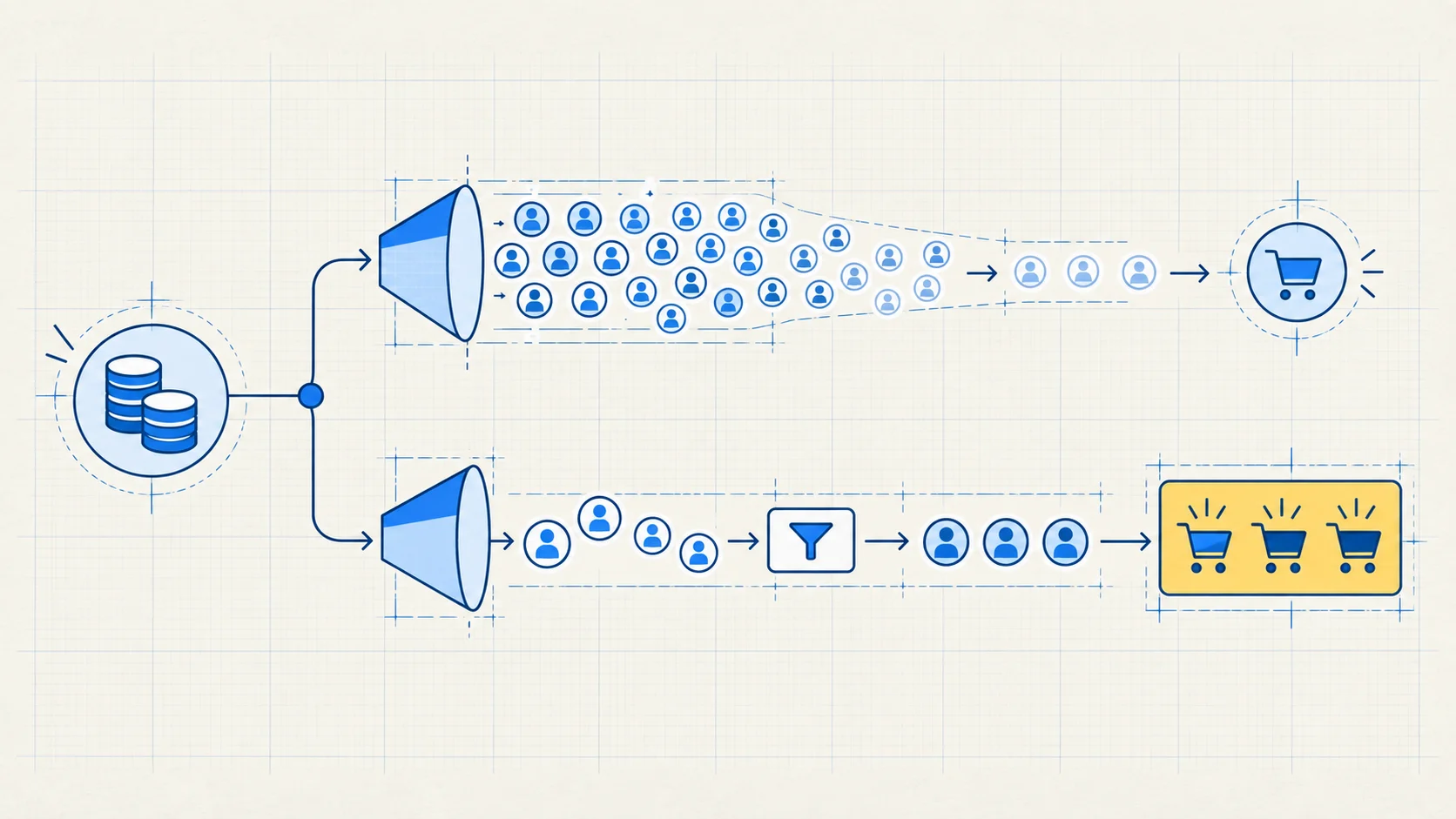
Keep the offer, destination and next action stable. Change one commercial idea, then follow the people exposed to each version beyond clicks and enquiries. Scale Manual’s working approach keeps the downstream outcome attached to the originating message so the next decision considers the suitability and downstream outcomes of the enquiries attributed to each message, not just the cheapest initial response.
Test the idea before polishing the presentation
For this test brief, treat changes to the image, edit, headline wording or layout as presentation variants. Treat a change to the buying reason as a commercial test.
Imagine a company selling a lead-generation implementation service. It could test messages about these two hypothetical situations:
- Situation A: The buyer receives enquiries but loses them during manual follow-up.
- Situation B: The buyer receives enquiries, but many ask for work the business does not offer.
Those are distinct acquisition problems. If both ads point to the same offer, page and enquiry process, the business can compare which situation attracts people who fit the service.
By contrast, changing a photograph to an illustration while retaining the same promise is mainly a presentation test. That may still be useful, but it answers a narrower question: which presentation was associated with more attention under that test setup? It does not establish that the presentation caused the difference.
Organic attention also needs separate treatment. Likes, views and comments can show that a presentation attracted attention, but engagement does not establish leads or sales. A useful paid test therefore needs a downstream measure connected to the decision you are trying to make.
Use customer language as evidence, not decoration
You do not need to invent test ideas in a brainstorming session. Start with the situations, objections and failed attempts already present in your enquiry records.
Scale Manual’s worksheet separates customers’ exact words from the owner’s interpretation and compares language across won, lost, no-show and poor-fit enquiries. Repeated wording is a hypothesis worth testing, not proof that the wording caused an outcome.
For example, suppose several enquiry notes contain variations of “we respond, but nobody knows who owns the next step.” Do not turn that into a universal claim. Record where the language came from, which outcome followed and your interpretation. You can then test a message built around unclear follow-up ownership against a different supported acquisition situation.
If you have no usable records, collect customer language before writing a long list of clever hooks. The aim is not to make the ad sound informal. It is to test a situation that recognisable buyers may genuinely be experiencing.
A one-page ad test brief
Complete this table before producing the variants:
| Decision field | What to write |
|---|---|
| Buyer situation | One specific acquisition situation, stated without exaggeration |
| Commercial question | “Does situation A or situation B attract more suitable enquiries for this offer?” |
| Idea under test | The buying reason, problem or objection that changes between variants |
| Stable elements | Offer, destination, form, follow-up route and primary action |
| Evidence | Customer wording, enquiry pattern or a clearly labelled assumption |
| Primary downstream outcome | The event that best answers the commercial question, such as qualified enquiry or attended call |
| Guardrail | A result you do not want to damage, such as poor-fit volume or team follow-up capacity |
| Decision record | What happened, what remains uncertain and what you will hold, change or investigate next |
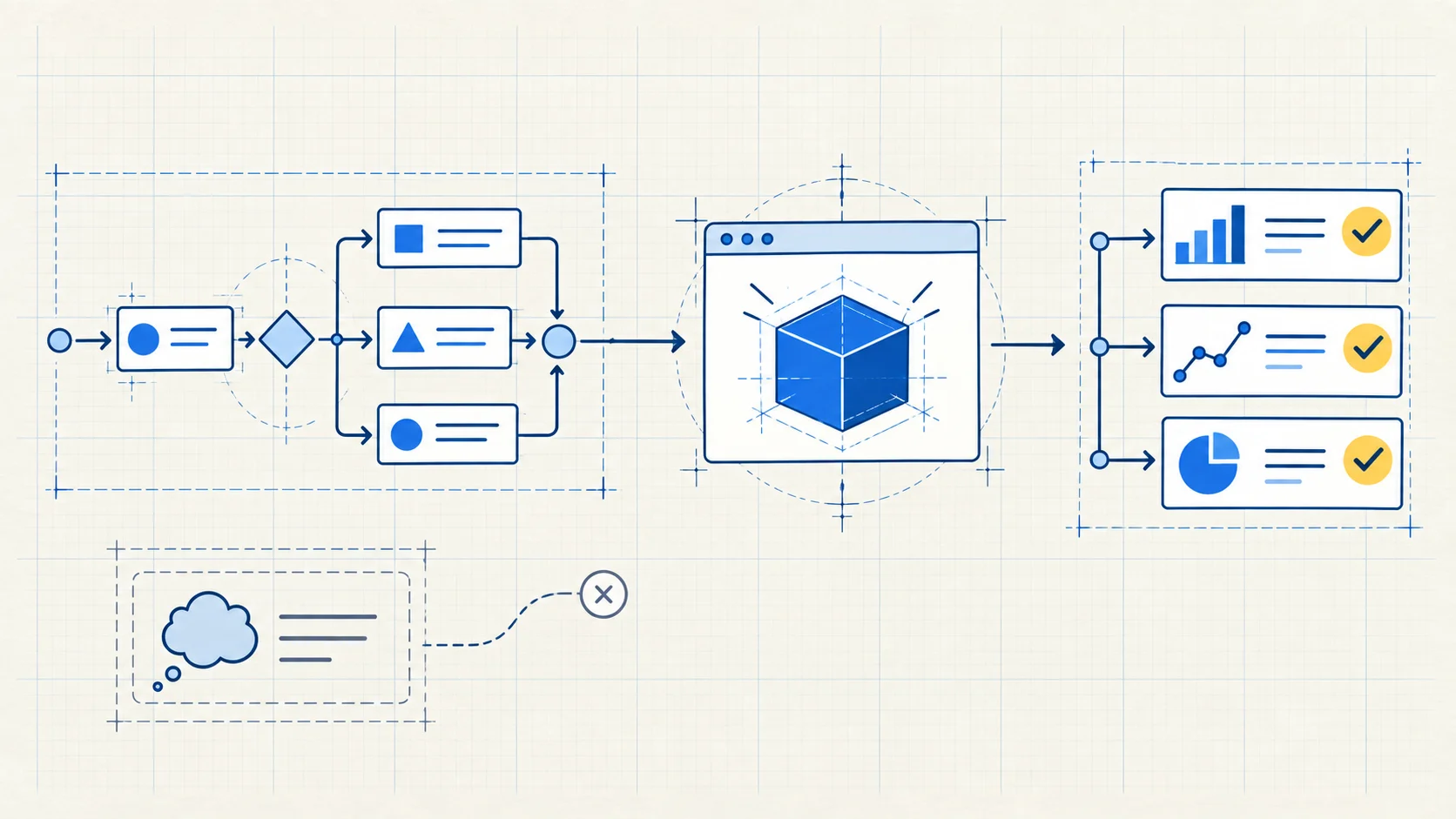
Use this abbreviated record to connect one buyer situation and commercial idea to an action and a downstream measure. This structure matters because an ad is only one part of a visible chain: message, page, form and follow-up.
Consider a hypothetical comparison in which the ad promises a quick quotation but the page asks visitors to apply for a consultation, while one version also receives slower follow-up. In this hypothetical example, the comparison would also reflect the page mismatch and unequal follow-up. Record these breaks instead of assigning all credit or blame to the creative.
Choose a measure that can change a decision
Do not automatically make click-through rate or cost per lead the winner metric. Choose the nearest downstream outcome that answers your commercial question and that you can track with reasonable consistency.
Scale Manual’s measurement worksheet follows spend, leads, qualified leads, scheduled calls, attendance, sales, collected cash, fulfilment cost, lifetime value and net profit. You may not have reliable data for every stage, and this practical comparison is not designed to establish causality—especially when volume is limited or execution differs between variants. The practical point is to retain the connection between the original message and the later outcome for as long as your records allow.
For an early test, your decision rule might be:
- Prefer neither variant if tracking or follow-up differed materially.
- Investigate further if one message attracts more enquiries but a lower proportion appears suitable.
- Keep testing if the available volume leaves substantial uncertainty.
- Advance a message only when its downstream pattern supports the commercial decision, not merely because it won more attention.
There is no universal spend or sample threshold in this approach. Your sales cycle, volume, data quality, fulfilment capacity and cost of a wrong decision all affect how cautiously you should interpret the result.
The next useful test
Before launching another batch of creative, write the commercial question in one sentence. If the variants cannot answer it, simplify the test.
Then keep the offer and route stable, label assumptions honestly, select one downstream outcome and preserve a short decision record. You will still have uncertainty, but you will know what the test was designed to teach you—and what it cannot establish.
I have spent thousands of hours studying marketing; my aim is to turn that learning into practical steps you can use. If you want to learn how to build and operate your own lead system, or explore help building a system you control, let’s have a brief fit conversation.