A weekly lead report should help you choose one accountable next action. It should not merely tell you that leads rose, costs fell or bookings changed.
Start by making sure the numbers describe the same path and period. Then locate the transition where progress stopped. Your decision may be to fix that handoff, investigate an uncertain signal or hold the system steady while you collect cleaner evidence.
That order matters. Scale Manual’s working view is that lead generation is an operating path, not a collection of isolated dashboard totals. Mapping defined stages reduces reliance on memory and improvised follow-up, while constraint-first review directs attention to the limiting transition instead of asking the team to improve everything at once.
Review the path, not just the headline
A useful lead path might be:
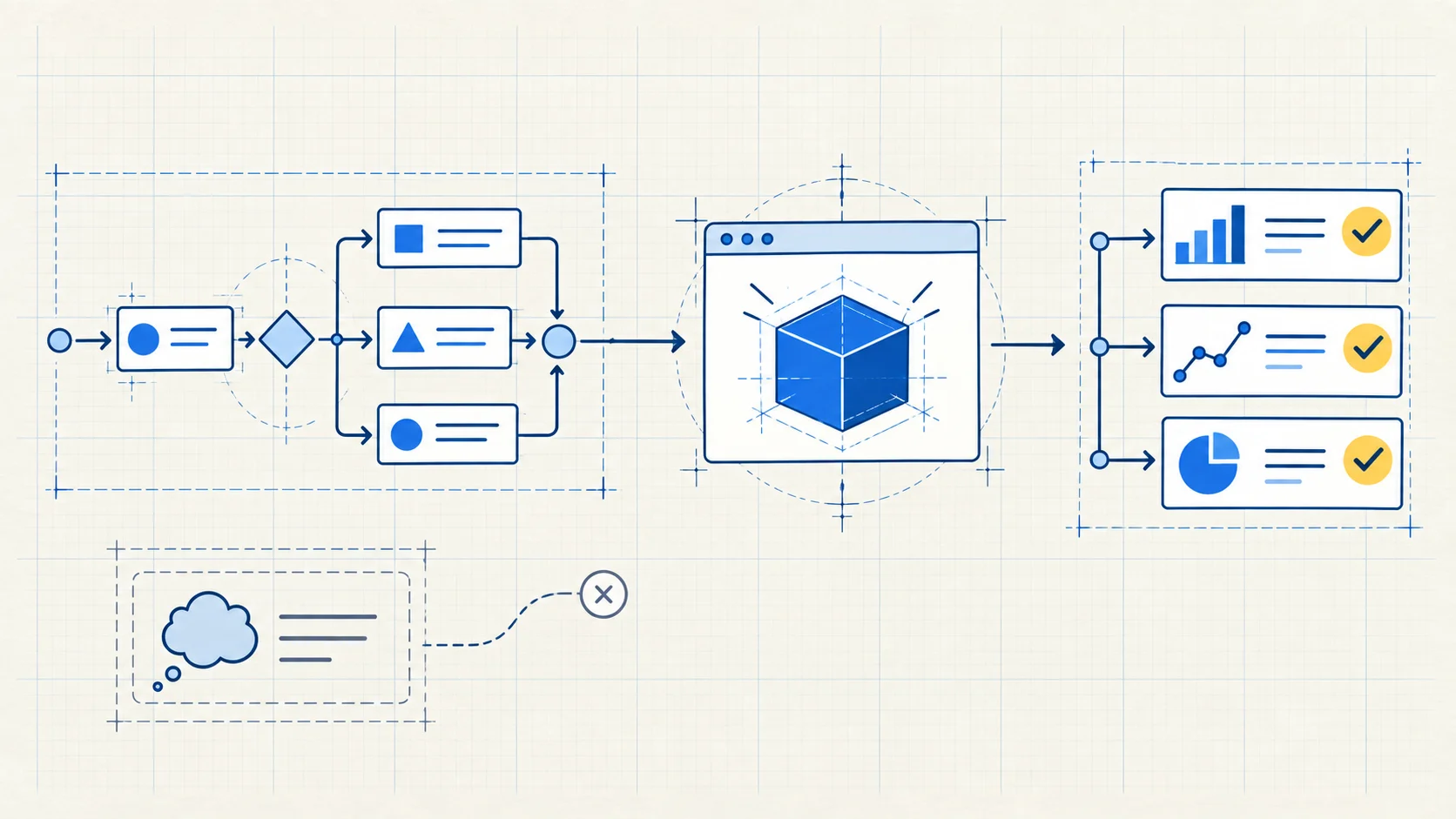
Message → page → form → notification → response → booking → attendance → sale
Your exact path may differ. What matters is agreeing on what each event means and retaining the connection between the originating message and the downstream result. Scale Manual’s measurement material follows spend, leads, qualified leads, scheduled calls, attendance, sales, collected cash, fulfilment cost, lifetime value and net profit.
You do not need every metric in every meeting. You do need enough continuity to avoid solving the wrong problem.
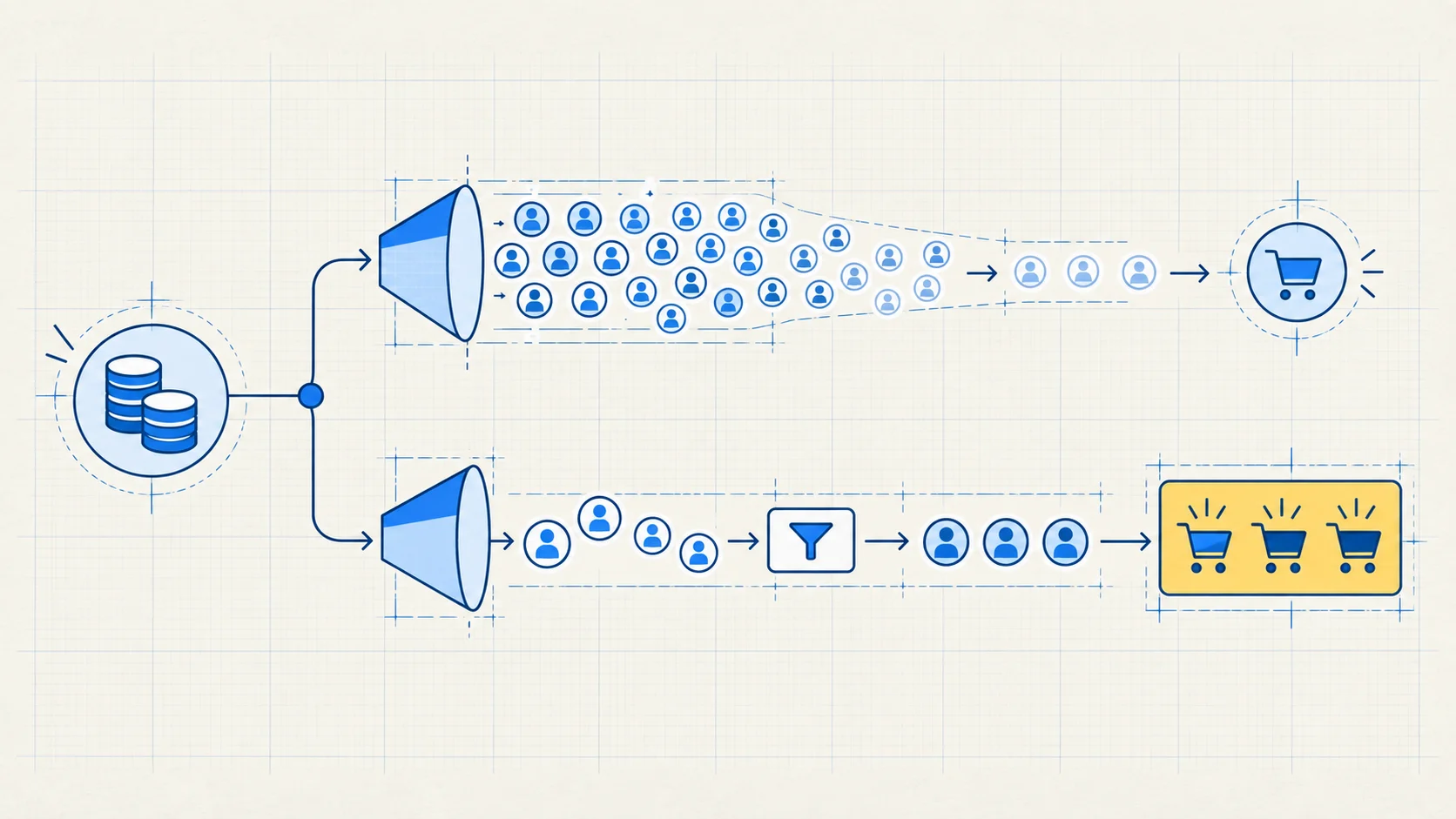
For example, a lower cost per lead does not tell you whether the leads were suitable, attended a conversation or bought. External course research also supports looking beyond cost per lead and diagnosing performance across stages, rather than treating the first conversion as the complete result.
The practical implication is simple: keep the downstream outcome attached to the message or source that produced it. That lets you decide whether to change the message, repair an operational handoff or leave the acquisition input alone.
First reconcile definitions and time windows
Before interpreting movement, ask:
- Does “lead” mean a submitted form, a valid contact or a qualified enquiry?
- Does “booking” mean an appointment selected, confirmed or attended?
- Are spend, enquiries and sales drawn from the same reporting period?
- Could later-stage results belong to leads acquired before this week?
- Are duplicates, cancellations and missing records handled consistently?
- Does every handoff have a named owner?
These are diagnostic questions, not universal reporting rules. The aim is to stop two systems—or two people—from using the same label for different events.
If your advertising platform shows 30 leads while the CRM shows 24, do not immediately rewrite the advert. First establish whether the difference comes from event definitions, timing, duplicate records or a broken transfer. Until that is clear, the apparent change is uncertain.
Find the broken transition
Once the definitions are aligned, compare adjacent stages rather than staring at totals.
A report might show that forms are still arriving, but fewer enquiries receive a recorded response. That points toward the notification → response transition. The next action is probably operational: trace where notifications go, identify the responsible person and check whether responses are being recorded.
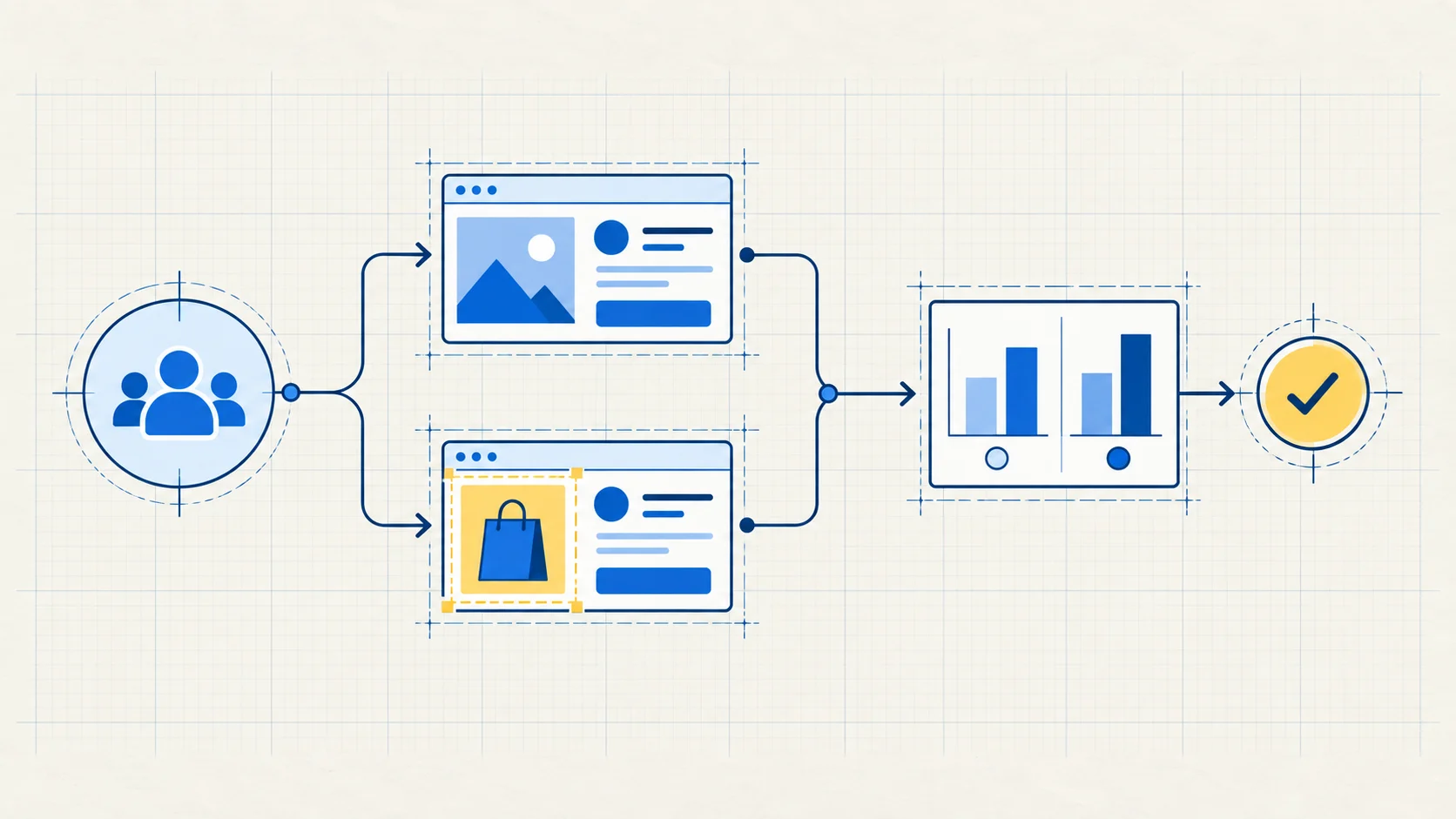
A different report might show fewer suitable enquiries from a stable volume of forms. That creates a message-and-fit question. It does not prove that the advert caused the change. Review what changed, keep the offer and destination stable where practical, and investigate one commercial idea at a time. A test brief can name one buyer situation, one idea, one action and one downstream success measure; this is a practical decision discipline, not a statistically controlled experiment.
If there are no enquiries at all, do not describe the problem as a leaking pipeline. There may be no flow to retain. Scale Manual’s reviewed process material explicitly distinguishes an empty pipeline from failed conversion.
A weekly decision aid
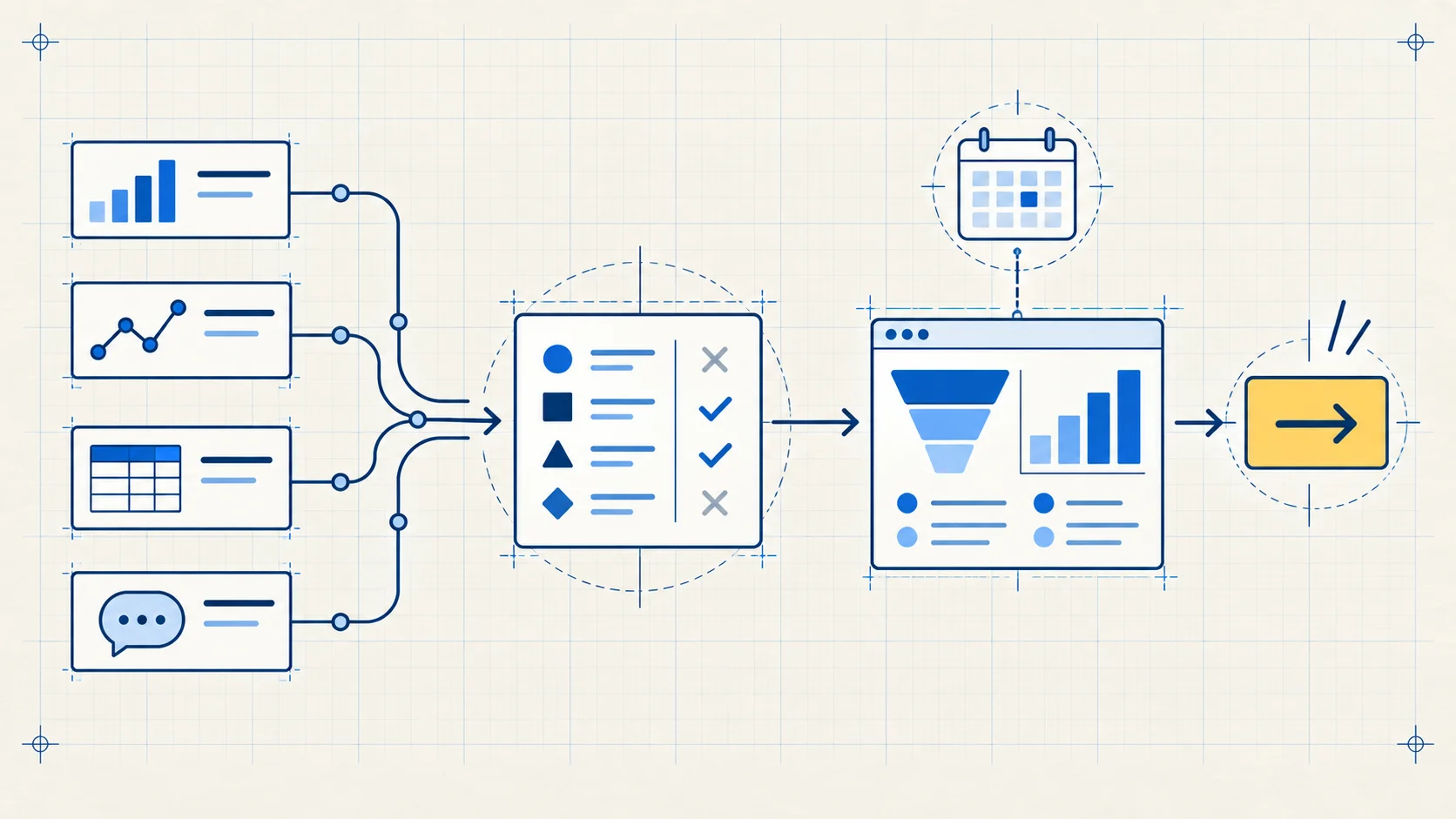
Use this compact agenda to turn the report into action:
| Review question | What to record | Possible decision |
|---|---|---|
| Are the definitions and dates aligned? | Conflicts between systems, labels or periods | Reconcile the data before changing the system |
| Where is the first material interruption? | The adjacent stages and available evidence | Investigate or repair that transition |
| Is the signal strong enough to act on? | Missing data, delayed outcomes and alternative explanations | Act, investigate further or hold |
| What is the smallest relevant change? | One owner, action and expected observation | Make that change while keeping unrelated parts stable |
| When will it be reviewed? | A date or suitable operating interval | Revisit the same transition with comparable evidence |
End the meeting with a record such as:
Observed: Submitted forms remained visible, but several had no recorded response.
Uncertainty: We do not yet know whether responses were missed or simply recorded elsewhere.
Next action: Sam will trace five recent enquiries from notification to response and reconcile the CRM and inbox records before the next review.
Hold steady: Do not change the advert until the handoff is understood.
This does not assume that five records are a statistically sufficient sample. It is a bounded operational check designed to reveal what the team should examine next.
When holding steady is the right decision
A report does not always justify intervention. Hold the current setup when definitions are unresolved, later outcomes have not had time to appear, several major variables changed together or the apparent movement could be ordinary variation.
“Hold” should still be accountable. Record what information is missing, who will obtain it and when the decision will be reopened. Otherwise, waiting becomes avoidance.
The weekly review has done its job when the owner can say: this is the transition we are examining, this is what remains uncertain, this person owns the next action, and these parts will remain unchanged for now.
I have spent thousands of hours studying marketing; my aim is to turn that learning into practical steps you can use. If you want to build and operate your own lead system, keep using this review to make one clear decision at a time. If you would rather get help building a system you control, explore whether Scale Manual is a good fit for the work.