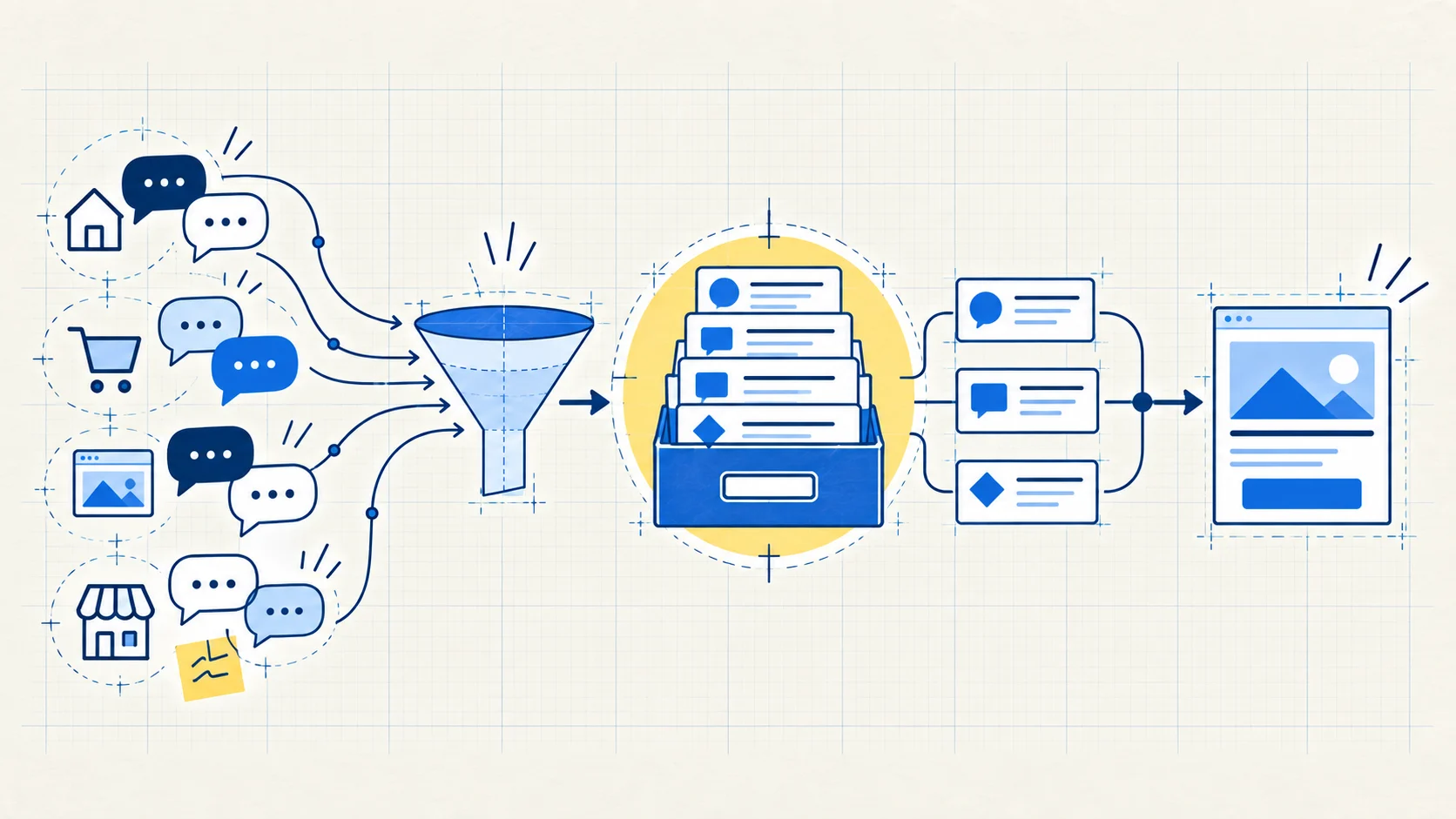
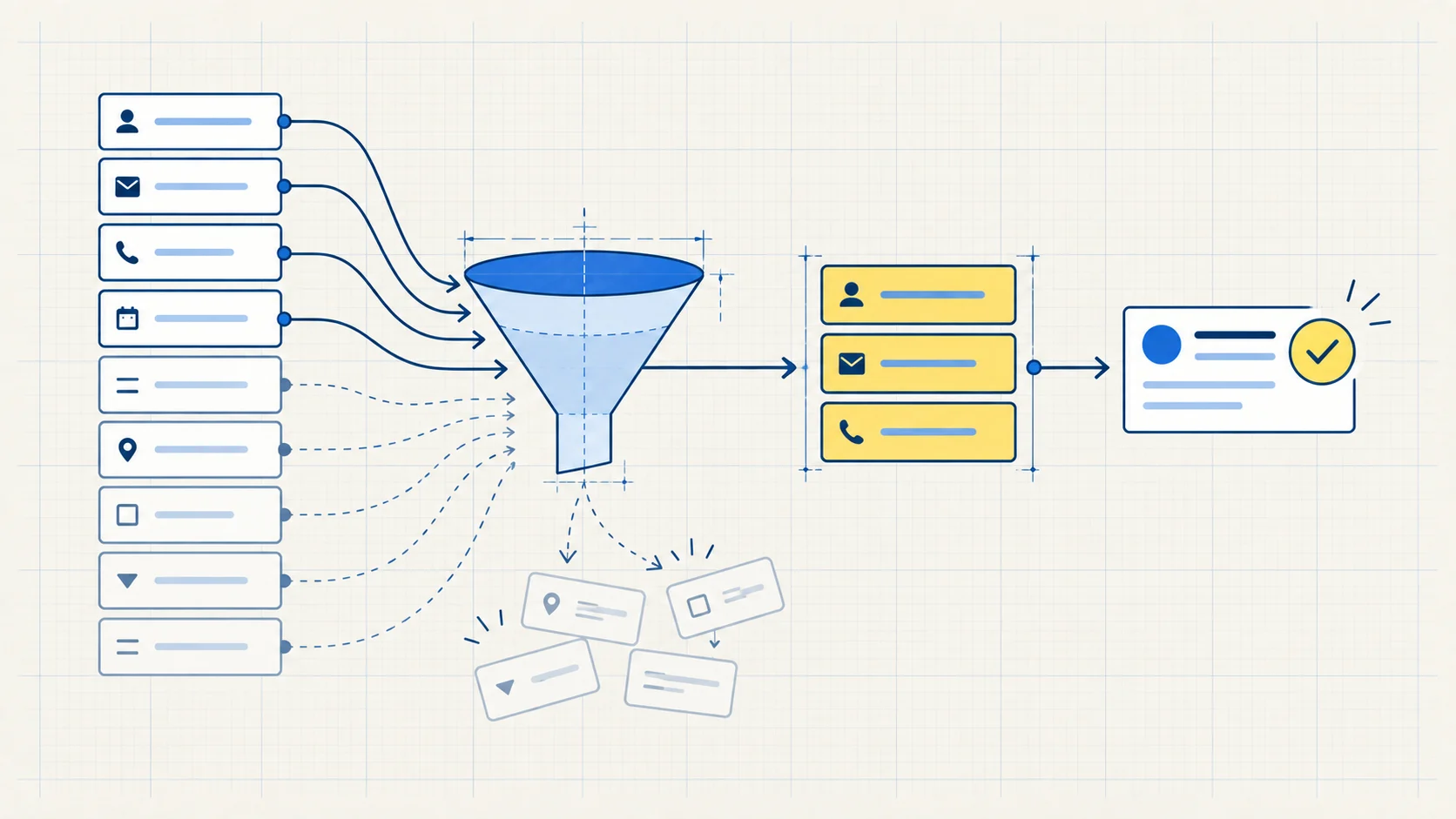
A lead-form question earns its place when the answer changes what happens next.
Keep a question if it helps you decide whether the enquiry fits, where it should go or what the next conversation should cover. Remove it if it merely satisfies curiosity, duplicates information you already have or asks the prospect to do work nobody will use.
That does not mean every form should be short. A one-step quote request and an application followed by booking serve different buying conversations. The right amount of friction depends on the decision the form must support.
Check the invitation before adding more questions
When poor-fit enquiries arrive, the form is an obvious place to intervene. It is not always the right place to start.
Wording cannot prove that somebody is qualified or has the means to buy. It can, however, make a relevant operating situation, need and readiness more visible before the click.
That changes the order of work. Review the opening, promise, proof, call to action and form as one invitation before adding fields. If an ad makes a broad promise to anyone who wants “more leads,” a longer form may be compensating for an invitation that never explained who the service is for.
Consider this hypothetical opening:
Get more leads for your business. Request a free consultation.
Now compare it with:
Your business relies on referrals, you have capacity for more work, and enquiries are being followed up inconsistently. Request a conversation about building a lead and follow-up system your team can operate.
The second version does not establish whether a prospect is suitable. It gives that person more information with which to include or exclude themselves. The form can then confirm the few details needed for routing and preparation instead of carrying the whole qualification burden.
Use this decision aid for every field
Review the form one question at a time:
| Test | Keep the question when… | Remove or revise it when… |
|---|---|---|
| Fit | An answer identifies a genuine match or mismatch with the work | You cannot explain how any answer affects suitability |
| Routing | Different answers send the enquiry to a different person, service or next step | Every answer reaches the same inbox and receives the same response |
| Conversation | The answer lets the owner prepare a more relevant discussion | The same information can be gathered naturally during the conversation |
| Participation | The response reveals whether the prospect can contribute information or access needed for the work | It becomes an essay prompt with no operational use |
| Necessity | You need the information before accepting or responding to the enquiry | You are collecting it only because another form does |
For each field, complete this sentence:
“If the prospect answers ___, we will ___.”
If the second blank stays the same for every possible answer, the question is a candidate for removal.
This is purposeful friction: retain truthful questions that change fit or the next action, while removing interface effort that reveals nothing useful.
One-step quote or application and booking?
Choose a one-step quote request when
The prospect is asking for a relatively direct next step, the initial information is easy to provide, and a person can assess or clarify the request after submission.
A hypothetical form might ask for:
- Name and contact details
- The service required
- A short description of the request
- Any detail needed to route it correctly
Its strength is ease of entry. Its trade-off is that your team may need to clarify more after submission. That is acceptable only if the notification, owner and response step are clear. Mapping the path from form to notification, named owner, response and booking helps expose a stopped handoff instead of leaving follow-up to memory.
Choose an application followed by booking when
The next conversation requires preparation, the work has meaningful fit constraints, or different answers genuinely change whether and how a meeting should happen.
A hypothetical application might ask:
- What is happening in the business now?
- What outcome are you trying to pursue?
- What have you already put in place?
- What constraint is stopping progress?
- Who will provide access, information or decisions during the work?
Its strength is context before the conversation. Its trade-off is more effort before the prospect has spoken to you. Do not add an application merely to make an offer appear selective. Match the funnel to the buying conversation, remove needless effort and preserve qualification that has an actual use.
Avoid weak proxies for qualification
Do not infer buying ability or suitability from job status, team size or a stereotype. Those details may be relevant in a particular operating model, but only when you can state how the answer changes the decision.
Ask about the real constraint instead. If implementation requires an internal owner, ask who will operate the system. If access to current tools is necessary, ask whether that access can be provided. If the service only addresses a defined situation, describe that situation in the invitation and confirm it with one direct question.
Review the whole path after editing the form
A cleaner form does not repair an unowned enquiry. Walk through the complete path:
- Submit a test enquiry.
- Confirm where the notification arrives.
- Name the person responsible for responding.
- Check what information that person receives.
- Confirm the next step offered to the prospect.
- Record where enquiries stop or need manual rescue.
The useful question is not simply, “Did more people complete the form?” It is, “Did the revised path produce enquiries that could be routed, answered and progressed appropriately?” Engagement alone does not establish leads or sales.
Start with one form and one decision. Remove questions that change nothing, keep those that support a real action, and repair any follow-up gap the walkthrough reveals.
I have spent thousands of hours studying marketing; my aim is to turn that learning into practical steps you can use. If you want to learn how to build and operate your own lead system—or explore help building a system you control—a fit conversation is a sensible next step.