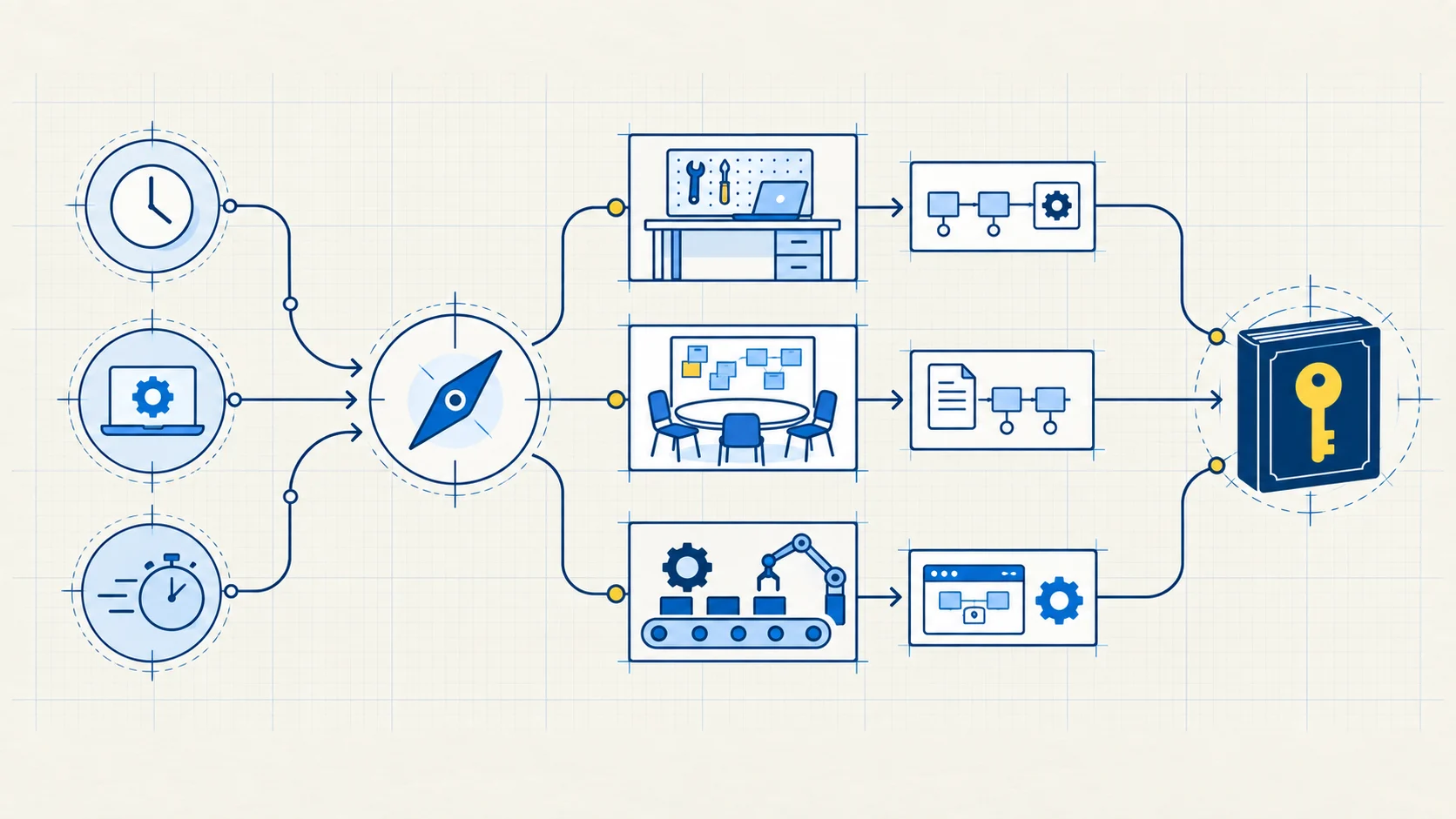
The right choice depends less on how much marketing knowledge you want and more on who will implement, operate and improve the lead system after the initial work.
DIY learning fits when you have time to translate ideas into working processes. A practical workshop makes sense when you or your team can implement but need clearer priorities and decisions. A done-for-you build is more suitable when the work matters but nobody has the capacity or range of skills to assemble it. An internal hire can work when there is enough ongoing work for someone to own. Postponement may be sensible when the business cannot yet support implementation or follow-up.
In practical terms, ownership is not the same as personally doing every task. You can direct the system and retain informed control while someone else handles much of the build.
Start with the operator, not the learning format
It is tempting to compare a course, workshop, employee and external supplier as different ways to obtain marketing expertise. That misses the operational question: after the advice has been delivered, who turns it into ads, pages, follow-up steps, tracking and routine decisions?
Information and supported execution are different commitments. A workshop can clarify what to do, but it cannot create spare implementation capacity inside your business. A build can remove much of the assembly work, but it still needs your customer knowledge, judgement and direction.
Scale Manual’s division of responsibility is useful here: the owner contributes customer knowledge, objections, access, judgement and direction, while implementation support can provide research, structure, execution and documentation. That changes the choice from “Do I want to learn or outsource?” to “Which decisions must stay with me, and who has the capacity to perform the work?”
Compare the five options
| Option | Best fit when | Main risk | Question to answer first |
|---|---|---|---|
| DIY learning | You have both learning time and protected implementation time | Collecting ideas without assembling a working system | What will you stop doing to make room for the build? |
| Practical workshop | You or a named team member can implement, but the plan or priorities are unclear | Leaving with decisions but no accountable operator | Who owns the first implementation task after the workshop? |
| Done-for-you build | You can supply direction and feedback, but lack the time or specialist coverage to build | Losing visibility if access, logic and documentation remain with the supplier | What must you be able to access, understand and change? |
| Internal hire | The work is sufficiently continuous and the role has clear authority | Hiring someone into an undefined process with competing expectations | What outcomes and decisions will this person own? |
| Postpone | Capacity, follow-up or offer decisions are not ready | Allowing “later” to become an indefinite default | What specific condition will trigger a review? |
This is a decision aid, not a scorecard. A small team with a capable operator may get more from a workshop than from a full build. An experienced owner with no available implementation time may be better served by a build, even if they understand the strategy already.
Use a two-part readiness check
Before choosing, assess both decision readiness and delivery capacity.
1. Decision readiness
Can you explain:
- which customers you want more of;
- what problem they are trying to solve;
- why they choose you;
- which enquiries are poor fits;
- what should happen after someone responds?
You do not need perfect answers. You do need enough knowledge to guide whoever implements the work. If these questions expose major uncertainty, start with focused research or a working session rather than rushing into a large build.
2. Delivery capacity
Can a named person:
- write or approve the message;
- create or coordinate the required assets;
- connect the enquiry and follow-up steps;
- check that tracking reflects what actually happened;
- review results and make the next decision;
- maintain the system after launch?
If the answer is yes, learning or a workshop may be enough. If the answer is no, more information will not solve the capacity problem. You need to simplify the scope, assign an internal operator or bring in implementation help.
What ownership should mean in practice
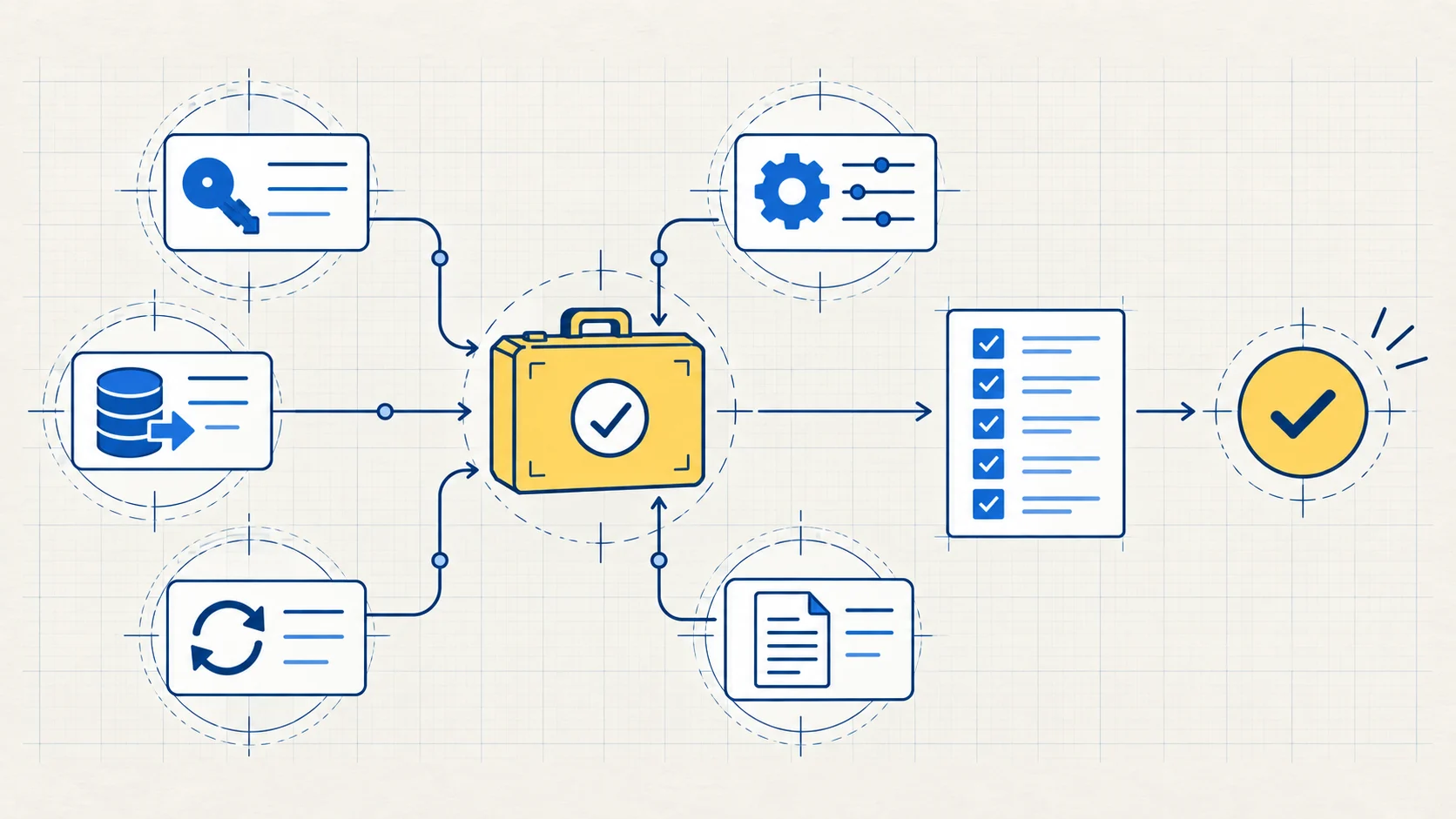
A done-for-you system should not force you to choose between delegation and control. Practical ownership means having appropriate access to the accounts, data, tracking, creative assets and instructions needed to understand and operate the system. It does not mean you own the third-party software or licences on which the system runs.
Before engaging help, write down three categories:
- Owner decisions: customer fit, offer boundaries, commercial judgement and final direction.
- Implementation work: research, asset production, setup, testing, documentation and coordination.
- Ongoing operation: responding to enquiries, checking handoffs, reviewing information and approving changes.
Then put a person or supplier beside every ongoing task. If the third category has no credible owner, the proposed delivery model is incomplete.
A simple decision rule
Choose the lightest form of help that leaves you with both a workable plan and a credible operator.
If implementation time is the real constraint, buying more education is unlikely to resolve it. A large build is also premature when the direction is still too unclear to guide the work. For an internal hire, define the remit, decision authority and expected outcomes. If you postpone, set a condition and date for reconsidering the decision.
I have spent thousands of hours studying marketing; my aim is to turn that learning into practical steps you can use. If you want to build and operate your own lead system, I use that learning to organise the practical decisions and work involved. If you would rather have a system built with you while retaining informed control, explore whether Scale Manual is a fit for the job.