Yes. You can outsource the work without surrendering control—but only if you agree on ownership and decision rights before the work begins.
The useful distinction is between choosing the system and manually constructing it. You should decide what the system must do, which trade-offs are acceptable and how success will be judged. A supplier can then research, write, configure and document the moving parts. Scale Manual’s operating view is that visibility and informed control do not require you to perform every task yourself.
That changes the supplier decision. Do not ask only, “Can they generate leads?” Ask whether the arrangement will leave you able to understand, direct and continue the system if the supplier or an employee changes.
Think like the owner, not the construction crew
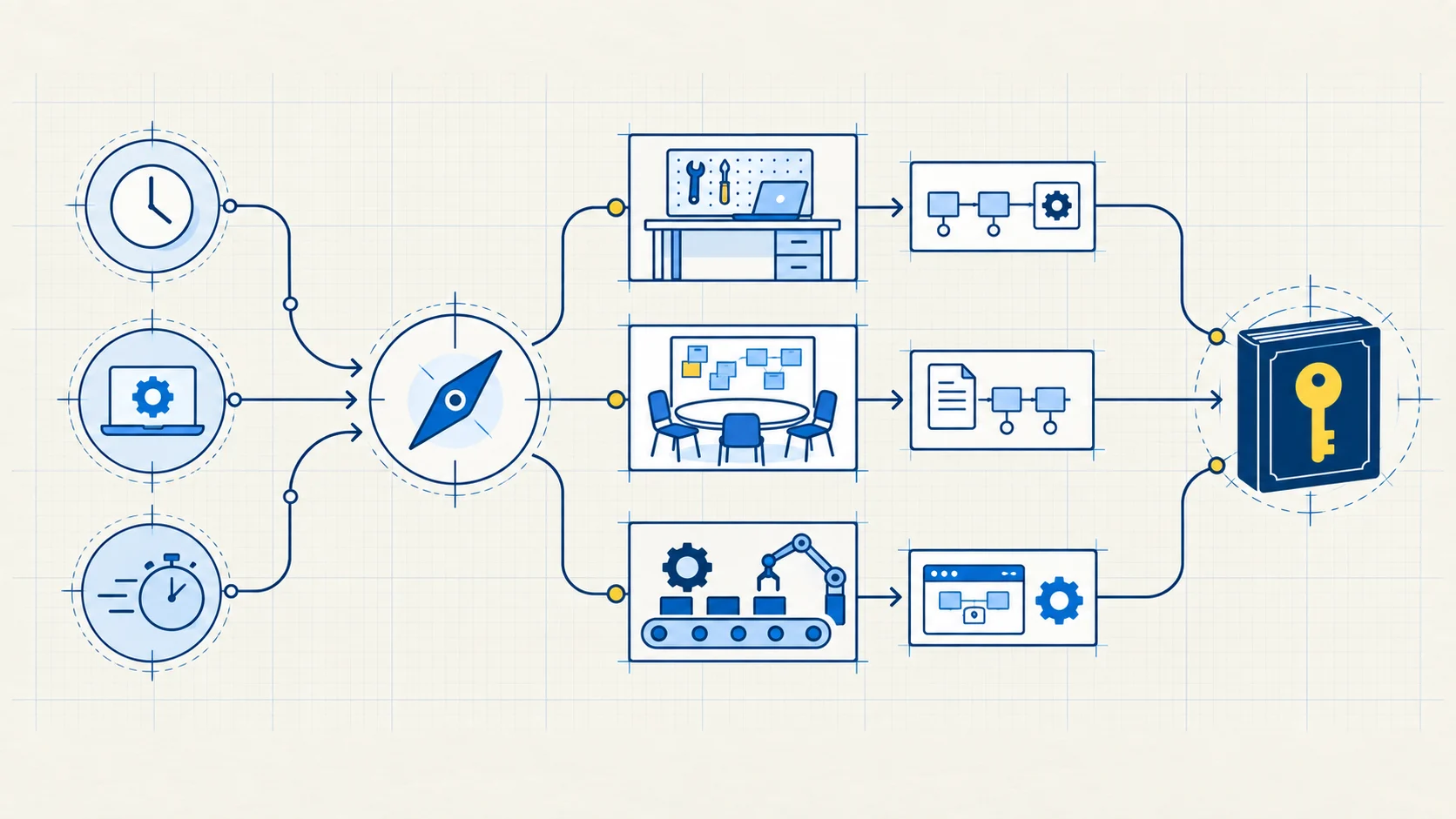
Imagine an architect and a construction team. The owner chooses what should be built and approves the important decisions. The team handles specialist execution. A clear blueprint records how the finished structure works.
The same division can apply to lead generation:
- You supply customer knowledge, common objections, access, judgement and direction.
- The supplier may handle research, messaging, ads, landing pages, follow-up, tracking and documentation, depending on the engagement.
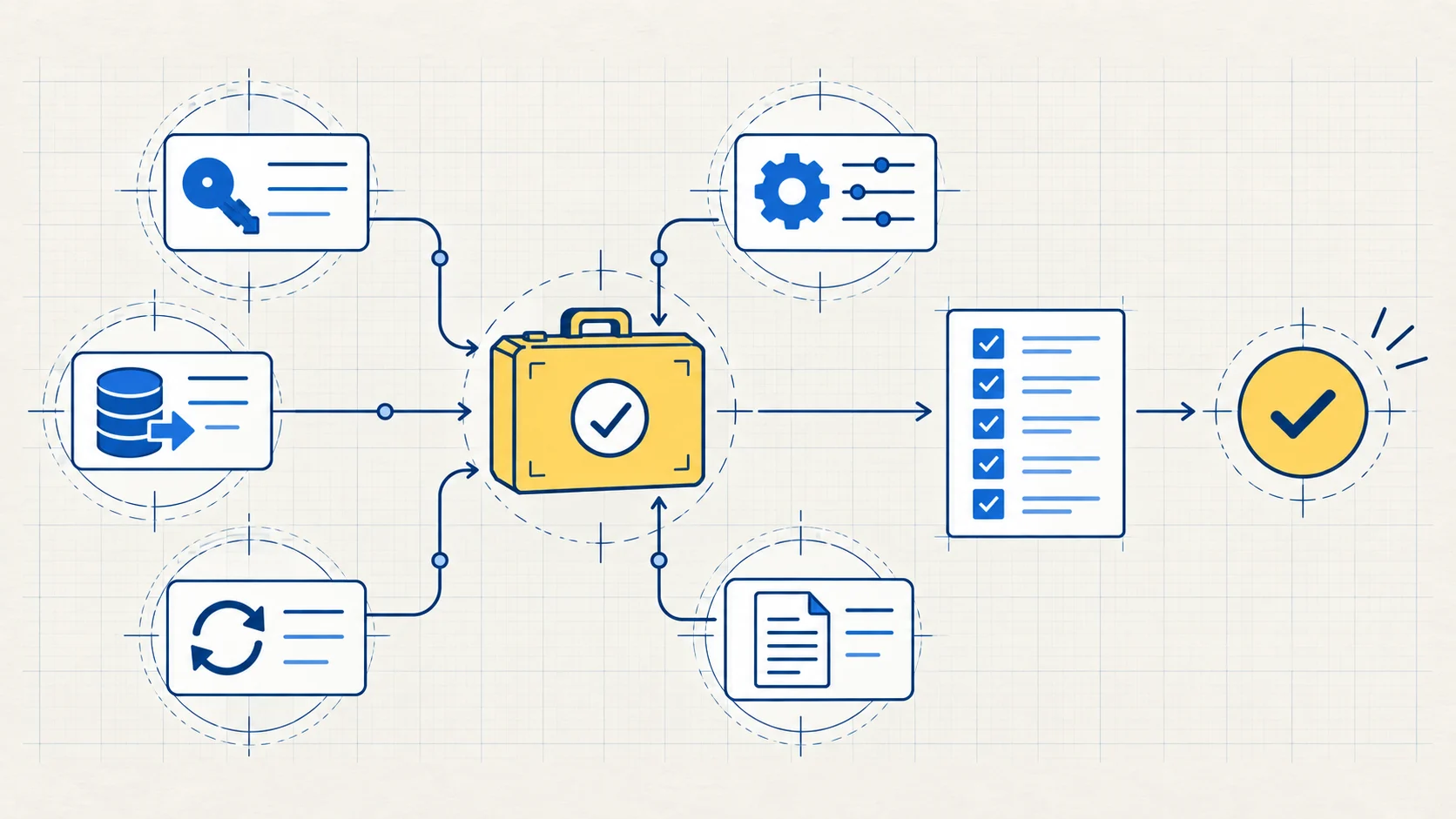
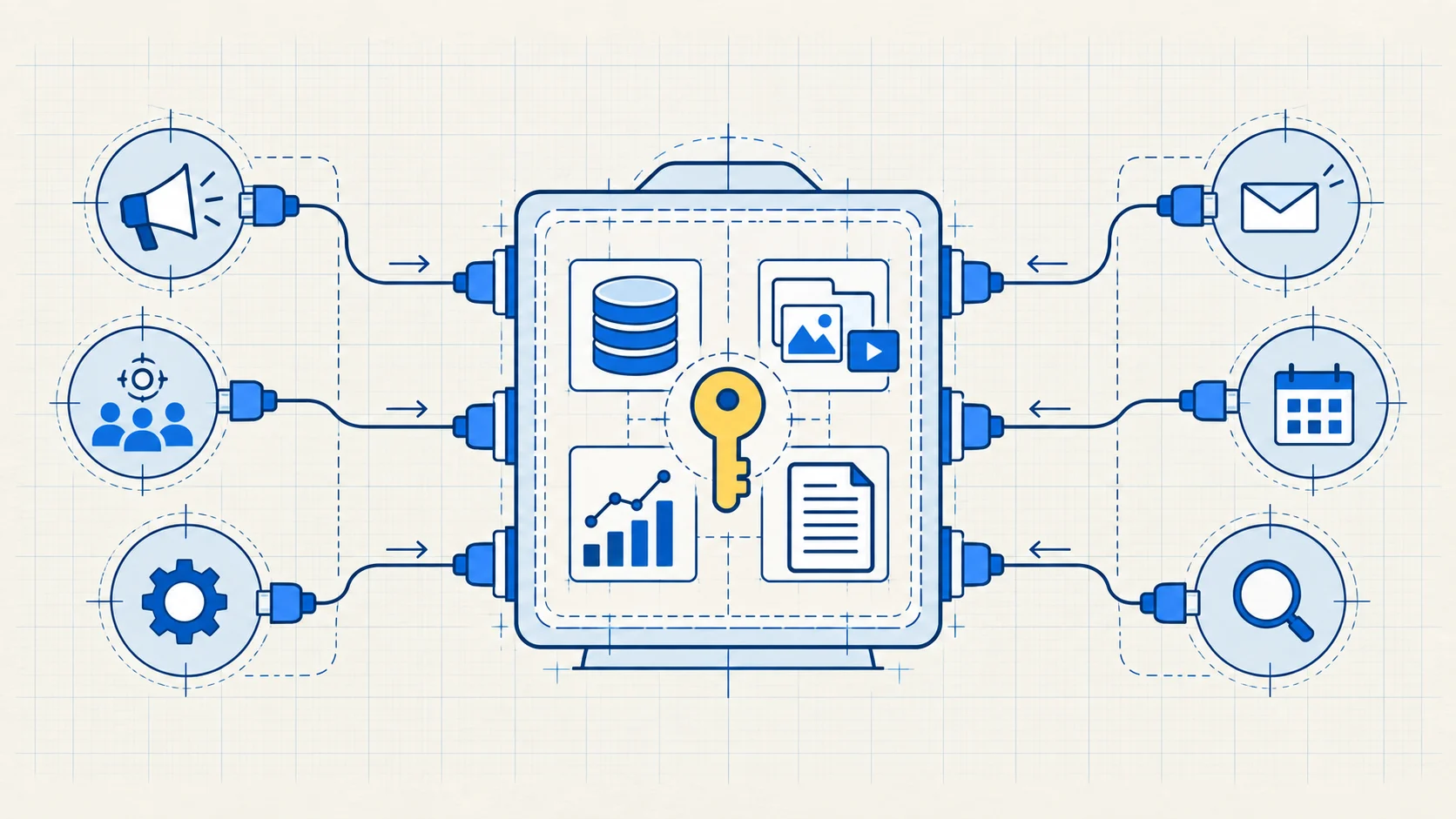
- The accounts, data, tracking, creative assets, access and instructions should remain visible and practically transferable.
This does not mean you must own every piece of third-party software or every licence. It means you know what depends on whom, retain appropriate access and can make informed decisions about the system.
Use an ownership matrix before choosing a supplier
Complete this table during supplier discussions. Replace vague assurances such as “you will have full access” with named accounts, permissions and decision rights.
| System area | Questions to settle before engagement | Preferable sign | Warning sign |
|---|---|---|---|
| Advertising accounts | Whose organisation creates the account? Who has administrator access? What happens when the engagement ends? | Your business has suitable administrative access from the start. | Access depends entirely on one supplier login. |
| Customer and lead data | Where is data stored? Who can export it? Which fields and history are included? | Storage, access and export responsibilities are explicit. | You can view reports but cannot obtain usable records. |
| Website or landing pages | Where are pages hosted? Who controls the domain and publishing access? | Hosting and publishing responsibilities are documented. | The destination disappears if the supplier relationship ends. |
| Tracking | Who controls analytics, tags and reporting definitions? Can another operator understand the setup? | Events and reporting definitions are recorded in plain English. | Only the supplier knows what the figures mean. |
| Creative assets | Which working files, copy and approved versions will you receive? What third-party licences apply? | Deliverables and licence limits are named. | “All assets included” is promised without defining formats or rights. |
| Follow-up process | Which inbox, CRM or tool receives an enquiry? Who owns the response and routing rules? | A named person owns each handoff. | Enquiries can sit between disconnected tools or teams. |
| Changes and approvals | Which choices need your approval? Which can the supplier make independently? | Decision boundaries are agreed before execution. | Important offer or message changes happen without your knowledge. |
| Documentation | What will explain the setup, dependencies and routine changes? | Documentation is usable by a future employee or supplier. | The process remains hidden in private notes or memory. |
The matrix is an editorial decision aid, not a certification or contractual template. Adapt it to the system being proposed.
Separate access from control
A dashboard login is not the same as operational control.
You may be able to see campaign figures while lacking permission to change billing, retrieve lead data or inspect tracking. Conversely, demanding control over every minor setting can slow execution without improving the business decision.
Aim for informed control:
- You can see the important parts of the system.
- You know who owns each recurring action.
- You approve decisions that affect your offer, customers, risk or material commitments.
- Another capable operator could understand the documented setup.
- Supplier-specific tools and licence limits are clearly identified.
Documentation matters because it should remain useful when a supplier or staff member changes. It should explain the system well enough to support continuity, without turning you into its full-time technician.
Compare the realistic alternatives
Outsourcing is not automatically the right choice.
Keep the work internal when your team has the skills, attention and responsibility to operate it. Choose a workshop or supported learning route when someone in the business can implement and maintain what they learn. Consider a done-for-you build when the direction is clear but your team lacks the time or specialist execution capacity. Postpone the project when nobody can supply decisions, access or ongoing ownership.
These are recognised implementation alternatives in Scale Manual’s current audience analysis, but they are strategic hypotheses rather than measured statements about every business.
The key question is not simply whether you can learn the work. It is who will make decisions, perform implementation and operate the system after it is built.
Five questions for the first supplier conversation
Ask these before discussing campaign tactics:
- Which accounts will sit under my business, and what access will I have?
- Which data and working assets can I retrieve in usable form?
- Which decisions require my approval, and which will you make?
- What documentation will explain the setup and its dependencies?
- What would another capable operator need to continue the work?
Clear answers do not guarantee good performance. They reveal whether the proposed relationship supports continuity or creates avoidable dependence.
The practical standard
Good outsourcing should reduce the amount of manual building you must do without removing your ability to direct the system.
You do not need to press every button. You do need enough access, information and decision authority to protect continuity. Set those conditions before engagement; end-of-build acceptance checks belong later, once there is a real system to inspect.
I have spent thousands of hours studying marketing; my aim is to turn that learning into practical steps you can use. If you want to build and operate your own lead system, you can learn the underlying decisions. If you want help with implementation, explore support building a system you control. The next step is a brief fit conversation about what exists, what is missing and who will operate it.