A lead-generation page does not need a video by default. Add one when it helps a prospective customer answer an important question about fit, process or effort. If clear text can do that faster, use text.
Whether video improves conversion is a question to test with your own funnel. Before building that test, define its job: “What must the right buyer understand before deciding whether to enquire?”
That distinction matters because the page is not an isolated piece of content. It sits between the promise that brought someone there and the next step you ask them to take. Scale Manual’s planning work treats the offer explanation and enquiry questions as connected: explain what the owner needs to understand, learn enough about their current situation to assess fit, and only then request contact details. The practical implication is that video earns its place by resolving uncertainty—not by making the page look more sophisticated.
When video is useful
Consider an offer-explaining video when the buyer needs help understanding something that would be awkward, abstract or easy to misread in short page copy.
Video may help when you need to:
- Walk through how the engagement moves from research to implementation.
- Explain what the owner contributes and what the implementation partner handles.
- Show a process or working demonstration.
- Address a recurring concern that needs context rather than a one-line reassurance.
- Help a buyer recognise whether their current lead situation matches the problem being addressed.
For example, a service-business owner may know that referrals are inconsistent but remain unsure whether the missing piece is messaging, a landing page, follow-up or tracking. A short video could explain how those parts connect and what would need to be examined before recommending a build.
The video still should not imply that watching it—or using the demonstrated process—will increase revenue. A process demonstration can show how a system could work, but it is not evidence of a commercial outcome.
When text is the better choice
Use concise text when the offer, fit and next step can be understood without a guided explanation.
Text is probably enough when:
- The service solves a familiar, specific problem.
- The process can be described accurately in a few short sections.
- The buyer mainly needs to confirm scope, participation and the next step.
- A video would repeat the page rather than clarify it.
- Important details would become harder to find because they were available only inside the recording.
A buyer should not have to watch a video merely to discover what the offer is or what happens after an enquiry. Keep the central promise, intended fit and next action visible in writing even when you add video.
Use this decision aid before recording
Complete this table for your page. If the final column remains vague, you probably do not yet have a reason to make the video.
| Buyer question | Can text answer it clearly? | What would video add? |
|---|---|---|
| Is this intended for a business in my situation? | Yes / No | Recognition, context or nothing |
| What problem is being addressed? | Yes / No | Example, walkthrough or nothing |
| What will I need to contribute? | Yes / No | Nuance, reassurance or nothing |
| What will the provider handle? | Yes / No | Process explanation or nothing |
| What can the available proof establish? | Yes / No | Demonstration or nothing |
| What happens after I enquire? | Yes / No | Guided explanation or nothing |
Then make the choice:
- Use text only if every important answer is already clear and the proposed video adds no distinct understanding.
- Use text plus video if the written page covers the essentials but a short explanation would resolve a specific fit, process or effort question.
- Repair the message first if neither format can state who the offer is for, what changes or what participation is required.
Wording can make a buyer’s operating situation and readiness more visible, but it cannot prove that the person is qualified or has the means to buy. That is another reason not to ask the video to do too much. Its job is to support an informed next step, not to manufacture certainty about the viewer.
Match the video to the enquiry
Suppose the page says that you help established service businesses build a lead system they can operate and control. The video explains that the owner supplies customer knowledge, judgement and direction, while implementation help can cover research, structure, execution and documentation.
The enquiry should then continue that conversation. Ask only for information that changes fit, routing or the next discussion. A question about current lead sources may help you understand the starting point. A question that creates work but changes no decision probably does not belong.
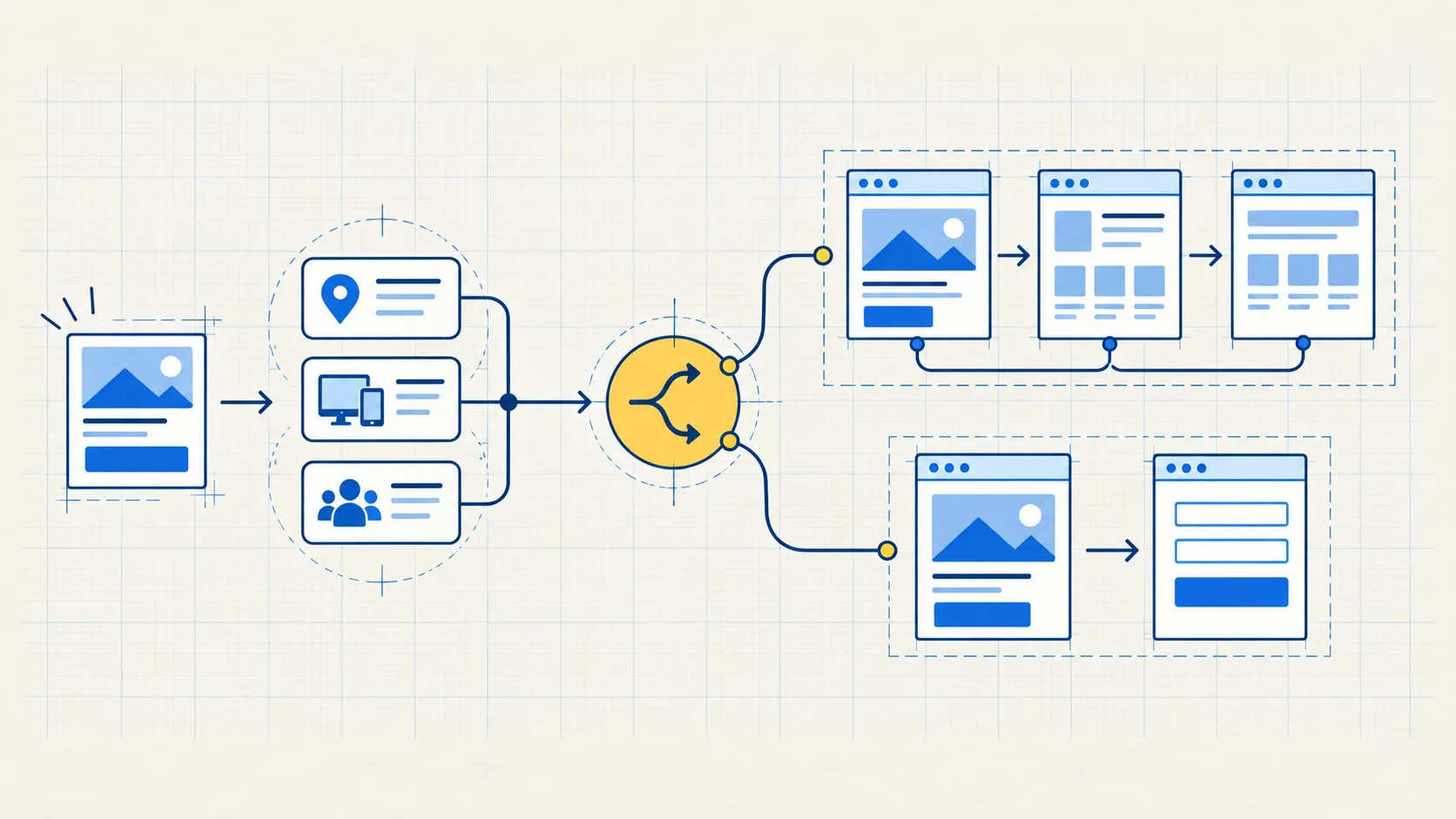
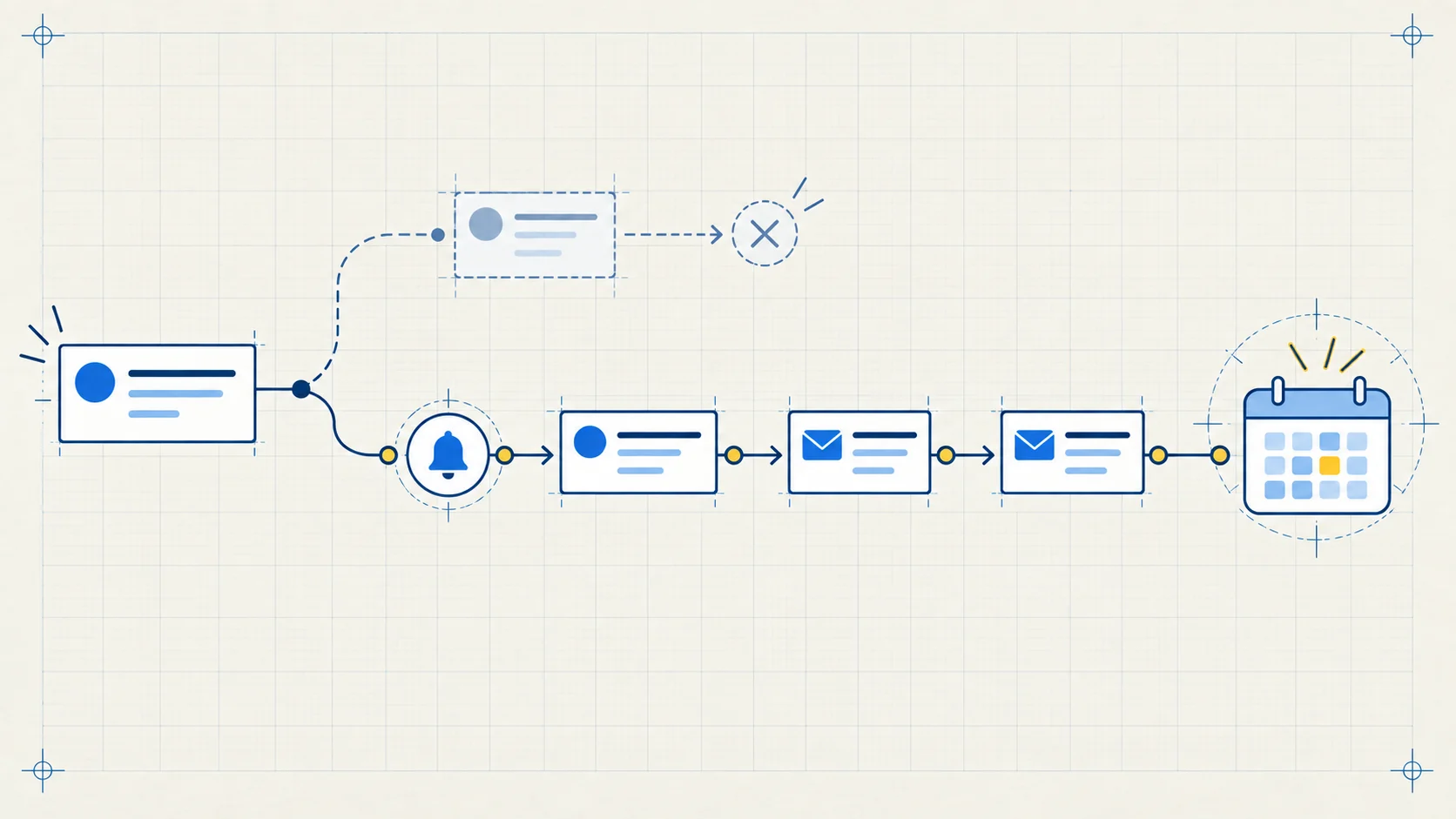
The principle is continuity: the ad creates an expectation, the page develops it, the video clarifies it, and the enquiry provides a sensible next action. The wider project applies this as a visible message-to-page-to-form-to-follow-up chain under owner control.
Test the format without overstating the result
Do not change the offer, headline, form, traffic and video at the same time and then credit the video for whatever happens.
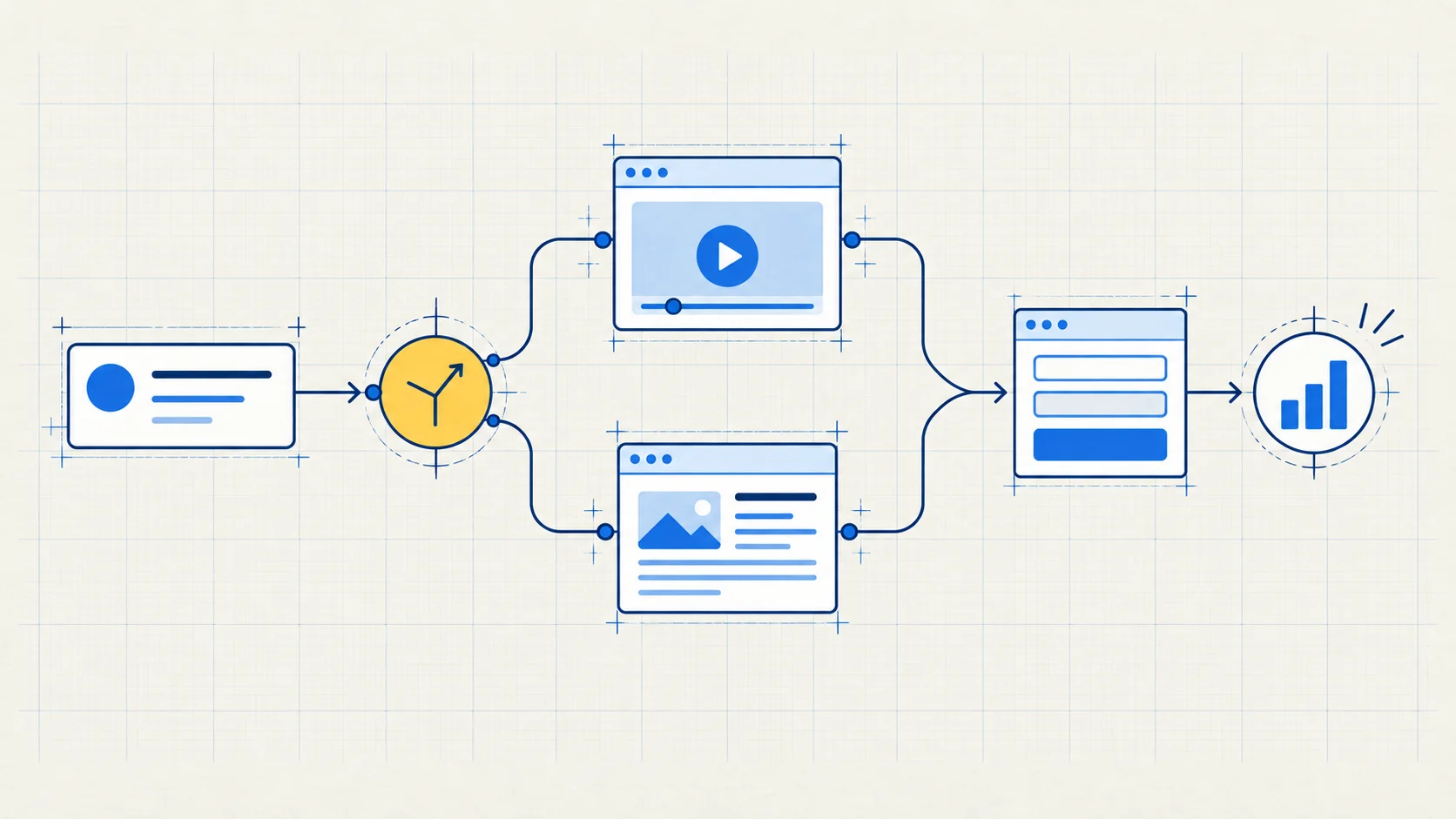
Start with one commercial question: “Does an offer-explaining video help suitable prospects progress to an enquiry?” Keep the offer and destination stable while comparing the presentation. Record downstream signals such as suitable enquiries and completed next steps, not views alone. Engagement does not establish that leads or sales followed.
Treat the result as evidence from that page, audience and period—not a universal rule about video versus text. If volume is low or other conditions change, record the uncertainty instead of forcing a conclusion.
The practical answer is simple: use video when it carries explanatory work that matters to the buyer. Otherwise, write the page clearly and let the next step remain easy to understand.
I have spent thousands of hours studying marketing, and my aim is to turn that learning into practical steps you can use. If you want to build and operate your own lead system, you can learn the parts and apply them. If you would rather have help building a system you control, a fit conversation can clarify whether that approach suits your business.