Sending every ad to a dedicated landing page is not automatically better. Sending every ad to your homepage is not automatically simpler.
Choose the destination that continues the ad’s promise and helps the right visitor take the next sensible step. Consider a focused landing page for a specific offer and enquiry path. A website page may be better when the visitor needs legitimate context, comparison or reassurance before deciding.
The important question is not “Which page type wins?” It is: “Can someone move from this ad to the next step without having to reinterpret the offer?” Research used by Scale Manual supports matching expectations across the ad, page and booking journey.
Start with continuity, not page format
Treat the destination as one part of a visible path:
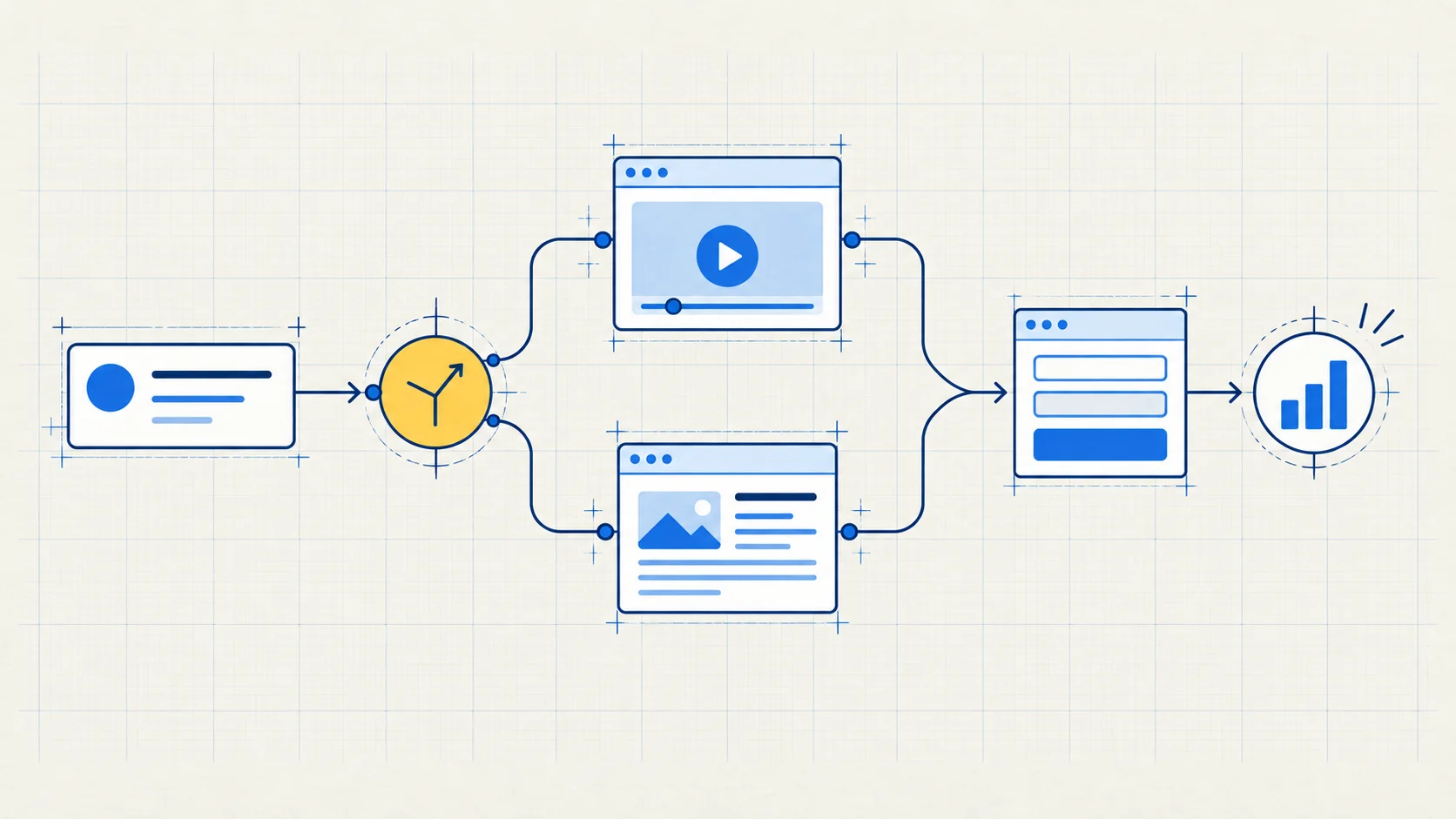
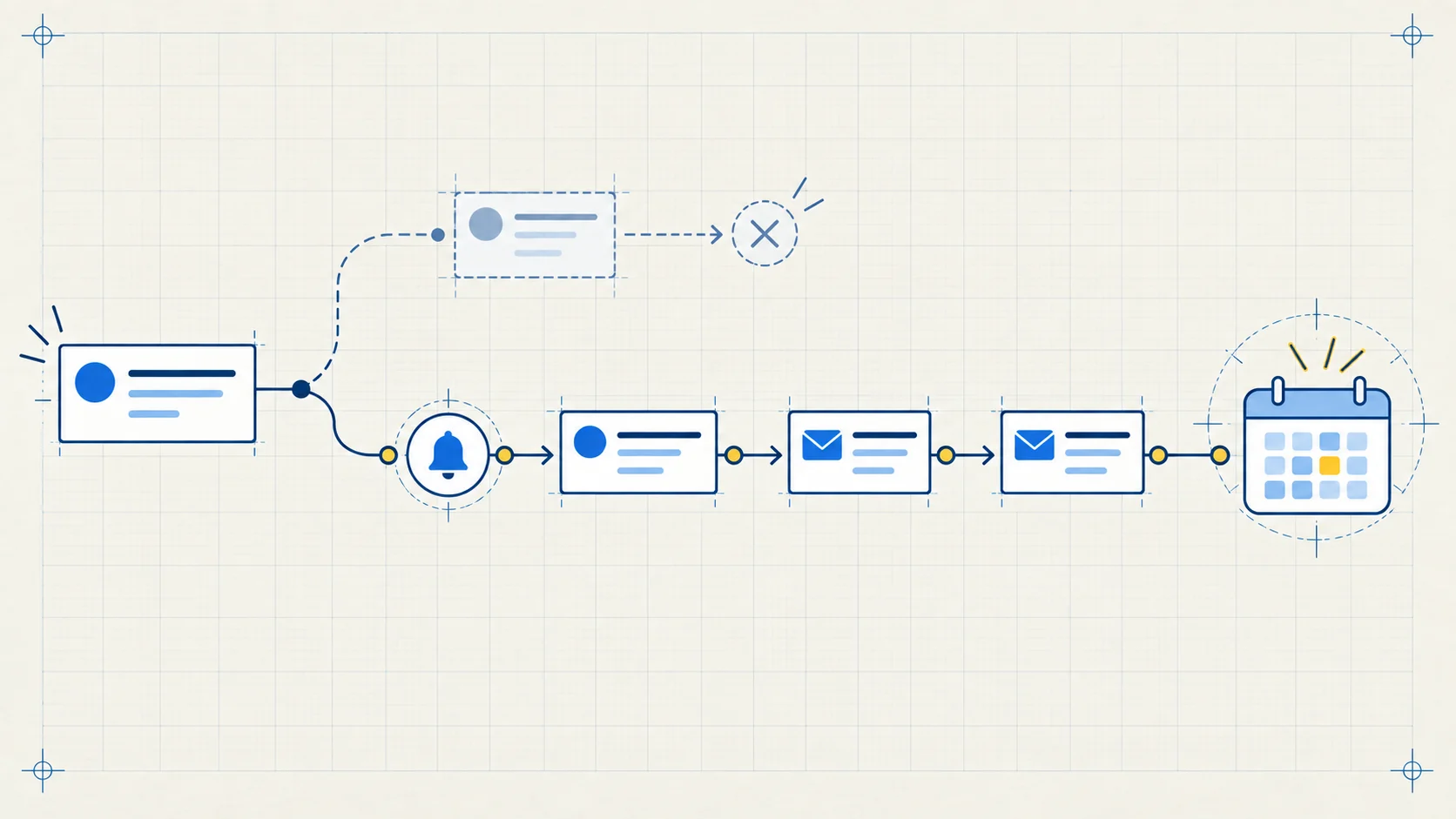
Ad → destination → form or action → notification → response → booking
Scale Manual’s reviewed process material maps defined stages so leads do not depend on memory or improvised follow-up. That changes the website-versus-landing-page decision. A persuasive page is not enough if its call to action leads nowhere, the notification reaches an unattended inbox or nobody owns the response.
This leads to two different design choices:
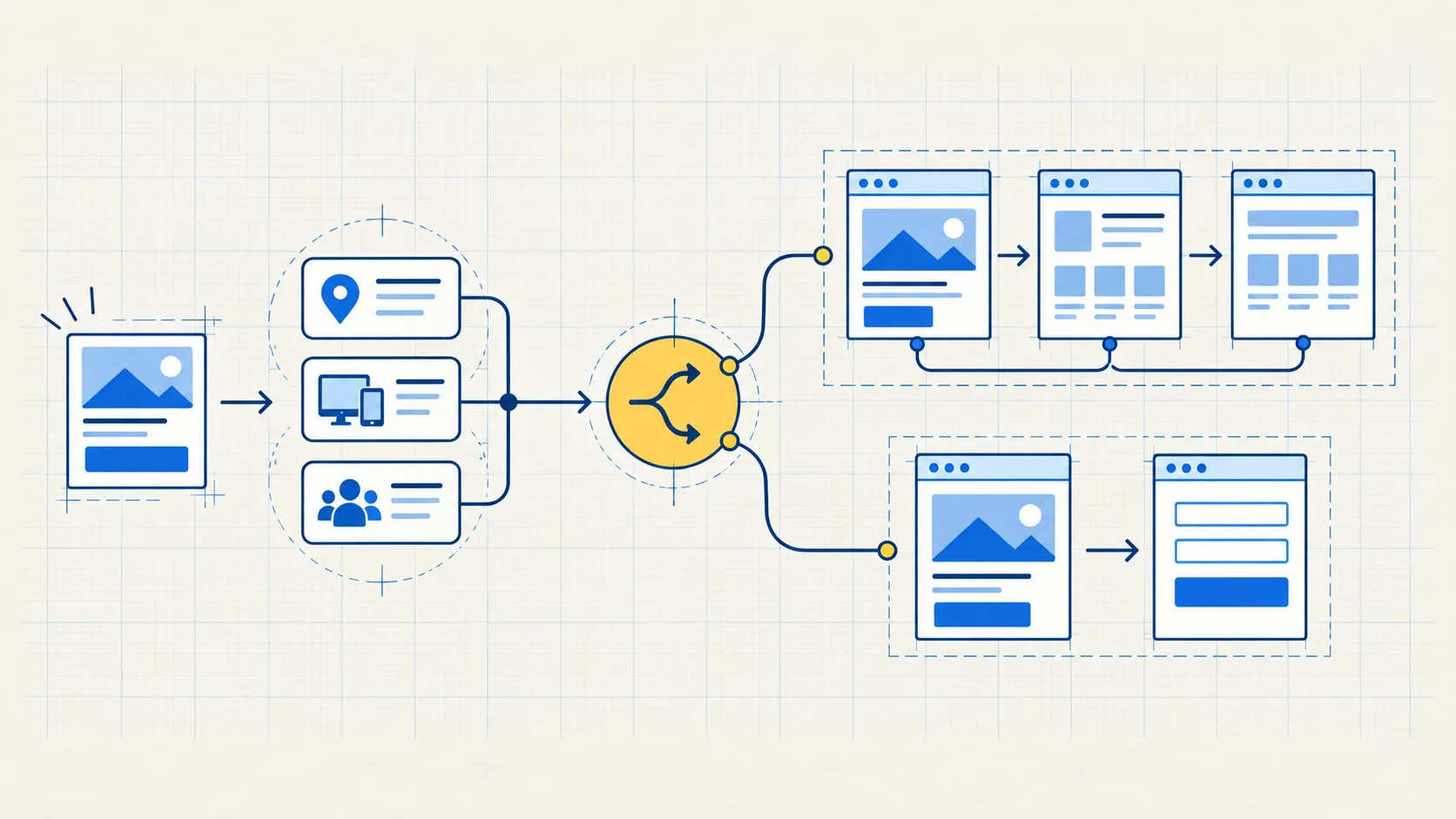
- A focused landing page can reduce unnecessary choices when one audience is considering one offer and one next step.
- A website can support broader exploration when the visitor reasonably needs to understand the business, services, approach or suitability first.
Neither destination repairs a broken handoff after the form. Before rebuilding a page, find the transition that is actually stopping the journey. Scale Manual’s bottleneck principle prioritises the limiting constraint rather than trying to improve everything at once.
When to consider a dedicated landing page
Consider a landing page when the ad makes a narrow promise to a defined audience and you want the visitor to consider a corresponding action.
For example, imagine an ad aimed at business owners whose enquiries are scattered across a CRM, inbox and spreadsheet. If the ad offers help mapping that lead path, the destination should keep discussing that situation. Sending the visitor to a general homepage and asking them to locate the relevant service adds interpretation work.
A landing page is a reasonable choice when:
- the ad presents one specific offer;
- one primary action is appropriate;
- you can explain enough for an informed next step;
- the form asks only for information that affects fit, routing or the next conversation; and
- someone owns the follow-up after submission.
Reviewed Scale Manual material recommends removing interface effort that reveals nothing while retaining truthful questions that change fit or the next action. Focus should not mean hiding information or forcing every visitor into an enquiry.
When a website page is the better destination
Consider a website page when exploration is part of a sensible buying decision.
A visitor may need to compare services, understand how the work is delivered, check whether the business handles their situation or review supporting information. In that case, navigation can be useful rather than distracting.
A website destination is a reasonable choice when:
- the ad introduces the business rather than one narrow offer;
- several services could legitimately solve the visitor’s problem;
- the decision requires supporting context;
- the visitor is likely to research before making contact; or
- the best next step is to choose among clearly explained paths.
Do not confuse “website” with “homepage.” The right destination may be a relevant service page that preserves message continuity while still allowing further research.
A message-match audit
Use this audit before choosing or rebuilding the destination. Read the ad and page together, then record your answer to each question.
| Check | What to compare | If the answer is no |
|---|---|---|
| Audience | Does the page clearly address the person or operating situation named in the ad? | Send the visitor to a more relevant page or revise the opening. |
| Problem | Does the page continue the same problem rather than switching to a broad company introduction? | Rewrite the first screen around the advertised situation. |
| Offer | Is the thing available on the page the thing the ad led the visitor to expect? | Align the offer before changing design. |
| Evidence | Does the page support its claims without inventing results or relying on vague praise? | Add an honest process explanation or working demonstration where appropriate. |
| Action | Is the next step clear, proportionate and available? | Choose one primary action or explain the available paths. |
| Form | Does each required question affect fit, routing or the next conversation? | Remove questions that create work without informing a decision. |
| Handoff | Does a named person or role receive and handle the enquiry? | Repair ownership before buying more traffic. |
The last row matters because the destination decision belongs to the whole system. If people submit the form but receive inconsistent follow-up, changing the page format may optimise the wrong transition.
How to test the choice without confusing the result
If you test a destination change, write down the commercial question first. For example:
For this specific ad and offer, does a focused service page produce more suitable enquiries than the current homepage?
Keep the offer and core message stable while changing the destination. Scale Manual’s testing guidance recommends keeping the offer and destination stable when testing an idea; applied here, the same isolation principle means avoiding simultaneous changes to the ad, offer, form and follow-up when the destination is the question.
Choose a downstream outcome that reflects the business decision, such as suitable enquiries or completed bookings. Attention or clicks alone do not establish leads or sales.
This is a practical comparison, not proof that one page type universally causes better performance. Record what changed, what remained stable, what happened after the click and what uncertainty remains.
The decision in one minute
Choose a dedicated landing page when one audience, one offer and one action should remain tightly connected.
Choose a relevant website or service page when informed visitors need genuine room to research or choose a path.
Repair the handoff first when the page already creates enquiries but ownership, notification or response is failing.
Keep the current destination for now when you cannot identify the decision a rebuild is meant to improve.
The best destination is not necessarily the page with the fewest links. It is the page that preserves the promise, supports a sound decision and hands the visitor into an operable next step.
I have spent thousands of hours studying marketing; my aim is to turn that learning into practical steps you can use. If you want to build and operate your own lead system, you can learn the steps. If you want help building a system you control, explore whether Scale Manual is a fit for your business.